The Platform
Greenpeace seeks to ban microbeads
Monday 4th April 2016
The UK Government is being urged to ban the use of plastic microbeads in cosmetics with a petition launched by Greenpeace UK earlier this year.
More than 140,000 people have backed the petition launched by Greenpeace UK just three weeks ago, saying the UK should follow the US in forbidding the use of “these wholly unnecessary bits of plastic”.
Here's some of the latest news on this from The Guardian and our thoughts...
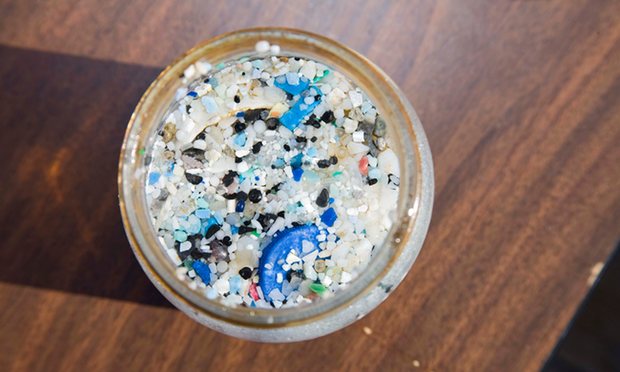
Will McCallum, head of oceans at Greenpeace, said, “Banning microbeads is a no-brainer and the UK is lagging behind. Given the huge bipartisan support in the US for a ban on microbeads and the promises of many major brands to phase them out, Greenpeace has launched a campaign calling on the UK government to follow suit and ban the bead.”
McCallum added that the group is working with other NGOs, politicians, retailers and major brands to move the campaign forward.
Following growing public concern, US president Barack Obama signed a bill outlawing the sale and distribution of toothpaste and exfoliating or cleansing products containing microbeads at the end of last year. Manufacturing will be banned from mid-2017, with the act entering full force two years later.
The Canadian government is planning to take similar regulatory action.
Environment ministers from Sweden, Austria, Belgium and Luxembourg called on the EU to ban microplastics in cosmetics and detergents in December 2014. Italy also backed the idea, which was first proposed by the Netherlands in 2013. But other countries, including the UK, favoured a non-legislative approach.
Microbeads were banned from cosmetics bearing the EU eco-label a year ago.
In October, the industry association representing the EU's £54bn per year cosmetics industry urged its members to stop using them. Cosmetics Europe said change was needed given public concerns over plastic debris in the marine environment and the availability of alternative materials.
Microbeads should be discontinued by 2020, it said, while noting that the “vast majority” of small plastic particles in the sea are produced by the breakdown of larger materials. Charges on plastic bags should help.
Some major cosmetics manufacturers are already phasing out the materials. L’Oréal announced in 2014 that it would phase out polyethylene microbeads by 2017, starting with its Biotherm and Body Shop brands.
Unilever stopped using them a year ago.
"The article from The Guardian points out how important it is to look for labels and accreditation when trying to make the right choices. Both the EU eco-label and the Unilever tab offer quick visual cues to show the item will not contain microbeads. In addition, you can also check out the ingredients list. Many scrubs now have natural particles like peach kernel or salt to offer the same effect as beads without the plastic pollution. It's not a matter of giving up scrubbing, it's a matter of changing the brands you use."
Donna from TBB
Blog Archive
-
 Most recent posts
- October 2019
- September 2019
- August 2019
- July 2019
- June 2019
- May 2019
- April 2019
- March 2019
- February 2019
- January 2019
- December 2018
- November 2018
- October 2018
- June 2018
- May 2017
- February 2017
- December 2016
- November 2016
- August 2016
- July 2016
- April 2016
- October 2015
- September 2015
- June 2015
- May 2015
- April 2015
- March 2015
Follow us


Please enter your login details below...
Not registered? Sign up here