The Platform
New car - noodling by guest blogger Andy Marmot
Friday 8th July 2016
Andy tells us about his search for the perfect car...
As this is a sustainability blog let’s ask the most important question first: Is it green?
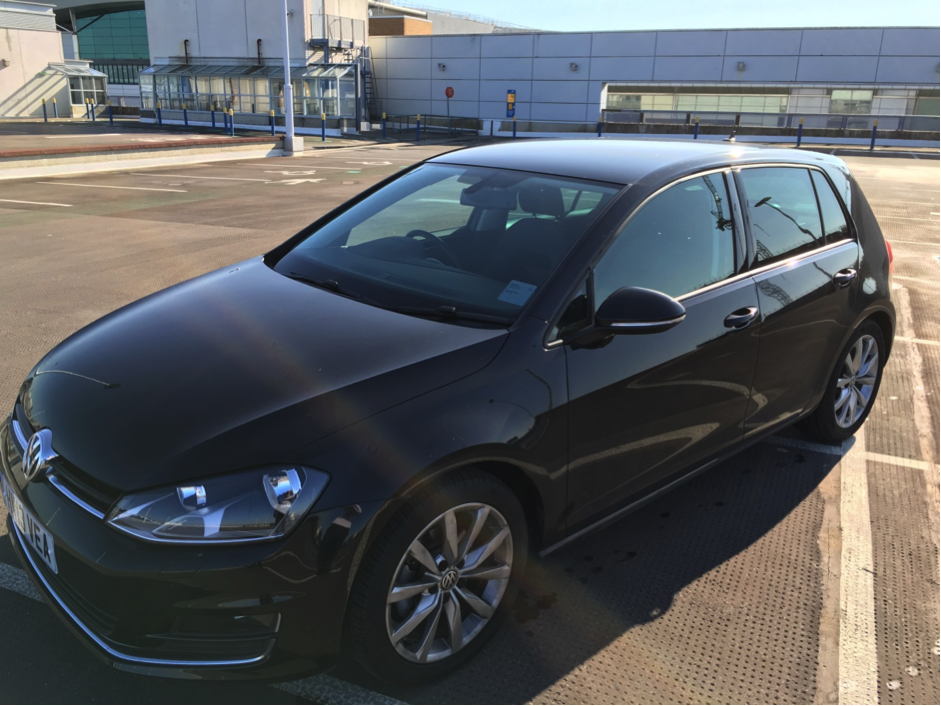
No it’s black.
Next question, is it a more sustainable mode of transport than my previous car? To answer that, read on.
It was time. It was to be honest, overdue time. I had been in a relationship with my old girl for over a decade but I had to face the facts it was over. Obviously I’m talking about my car, but after many miles together my old Mark 4 Golf was going to have to go.
So what to replace her with? Whatever the new car was going to be it had to do everything my old Golf did but more. So I wrote up a list of the most important things that the new car needed to have to meet my expectations. Obviously it needed to have a high NCAP rating to ensure the safety of my daughter, it needed to be able to take an iSize car seat, it needed to have a reasonable specification level, it needed to go when I needed to give it the beans and it needed to be more economical.
I came to the conclusion that my list constituted a pretty tall order with a couple of things that seemed to be mutually exclusive of each other. I had already made the decision that I would buy a used car and that if possible I would choose a main dealer as the level of protection that comes with the purchase from them is preferable.
I decided to start on the NCAP ratings and allow that to narrow down my list, I broadly wanted something similar to the Golf again so a quick review of the NCAP website narrowed down my potential list. After that I decided to focus on the economy aspect this is the moment that I started to have more sustainably coloured thoughts.
I found the website www.nextgreencar.com and found it very useful, it allowed me to research my shortlist and I found myself circulating around to another VW Golf. Now obviously VW have a bit of an issue around the faking of emissions tests, the website made it quite clear that this issue only affects the Mark 6 Golf (I was looking at a Mark 7) and then only certain diesel engines.
By this stage diesel was out anyway, WestQuay’s Environment and Community Coordinator Sam Henderson had already given me a lecture on why diesel cars were worse for the environment and that based on my relatively short journeys I would quickly clog up the very expensive sounding diesel particulate filter.
So a petrol Mark 7 Golf it was to be, but which one? The range was huge! Once again research on www.nextgreencar.com bore fruit. BlueMotion technology appeared to give the best answer to my sustainability requirements. However the standard BlueMotion Golf was a little bit bland, it lacked some of the toys, the interior did not inspire me and it was more expensive than a standard Golf. Enter the helpful car salesman at White Rose VW in Petersfield “what about a Golf GT?” I almost snorted out loud at that suggestion, how could a GT meet my sustainability requirements? “the 1.4l Petrol comes with BlueMotion technology but has more power than the original Golf GTi when you need it”. I was sold on the model from this point on, a couple of test drives later and I agreed the purchase of the car.
The Bluemotion technology is very clever, not only does it switch the engine down to 2 cylinders automatically to reduce fuel consumption it also lets me know via a message on the dashboard if I am doing something uneconomical like not changing gear at the right time, changing down with the revs too high or not letting the start stop technology activate when I should be. Speaking of which the start stop technology is very smooth, you bring the car to a halt, take it out of gear and release the clutch and the engine quietly switches off, when it’s time to you again press the clutch and the engine springs back into life again and you are in gear and away with no delay. The economy on the car delivers pretty much as expected if it is driven in the correct way, however if I do have to give it the beans (and it does go when I do!) the economy falls away pretty sharply.
So to wrap up this blog - what have I learned? That a little bit of research goes a long way and www.nextgreencar.com is a very useful tool; buying a more environmentally friendly car is more expensive than a normal model but the reduction in running costs including the £30.00 a year road tax will make up for that in the long run, and a car does not have to be green to be better for the environment. Besides if I keep this car for a decade maybe my next car will run on hydrogen, now that would be environmentally sound technology!
Andy
Blog Archive
-
 Most recent posts
- October 2019
- September 2019
- August 2019
- July 2019
- June 2019
- May 2019
- April 2019
- March 2019
- February 2019
- January 2019
- December 2018
- November 2018
- October 2018
- June 2018
- May 2017
- February 2017
- December 2016
- November 2016
- August 2016
- July 2016
- April 2016
- October 2015
- September 2015
- June 2015
- May 2015
- April 2015
- March 2015
Follow us


Please enter your login details below...
Not registered? Sign up here